

Send the image with the model call
The examples below usesetupObservability(). Read Integration Guide first if you have not set that up yet.
Vercel AI SDK
Put the image in afile part inside the user message. experimental_telemetry turns tracing on for the call.
OpenAI SDK
Put the image in animage_url part, as a data URL.
Image shapes LangWatch understands
Send any of these and the picture is captured. The list covers the shapes the major providers and agent frameworks produce.
Always set the media type. Without one, LangWatch leaves the bytes inline in the trace instead of storing them, because it cannot serve them back as a picture.
What happens to the bytes
LangWatch moves the image out of the span at ingestion. The bytes go into content-addressed object storage and the message part becomes a/api/files/<projectId>/<id> reference, around 60 characters where the base64 was.
Storage is addressed by SHA-256, so identical bytes are stored once. For example, the same picture sent on ten traces costs one stored object.
On read, LangWatch serves the original media type for images, audio, video and PDF files. Anything else is served as a download.
Where the image appears
The trace list draws a thumbnail next to the input preview, so you can spot a run with a picture without opening it.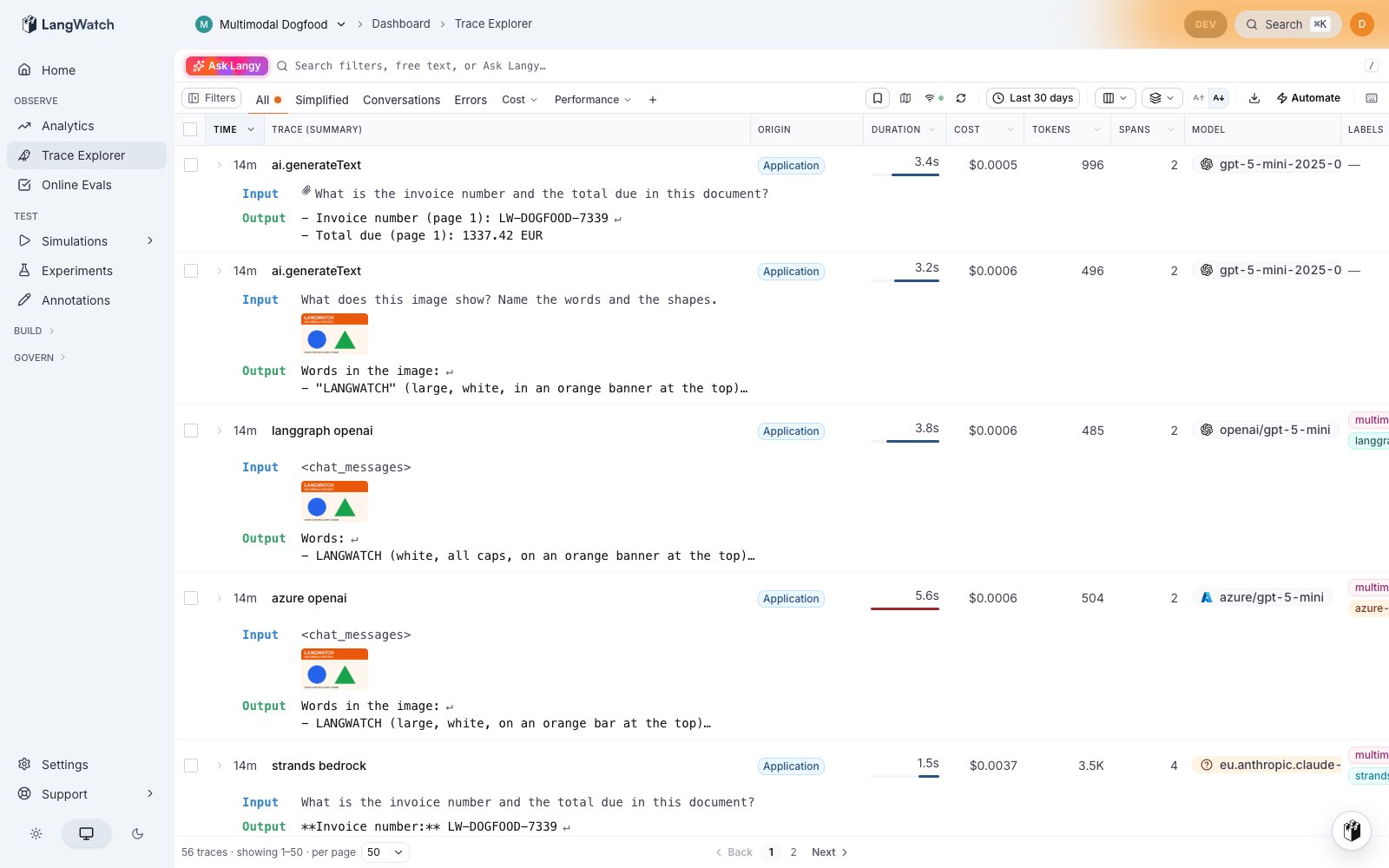
Trace list rows showing image thumbnails next to the input text, and a paperclip on the row whose attachment is a document
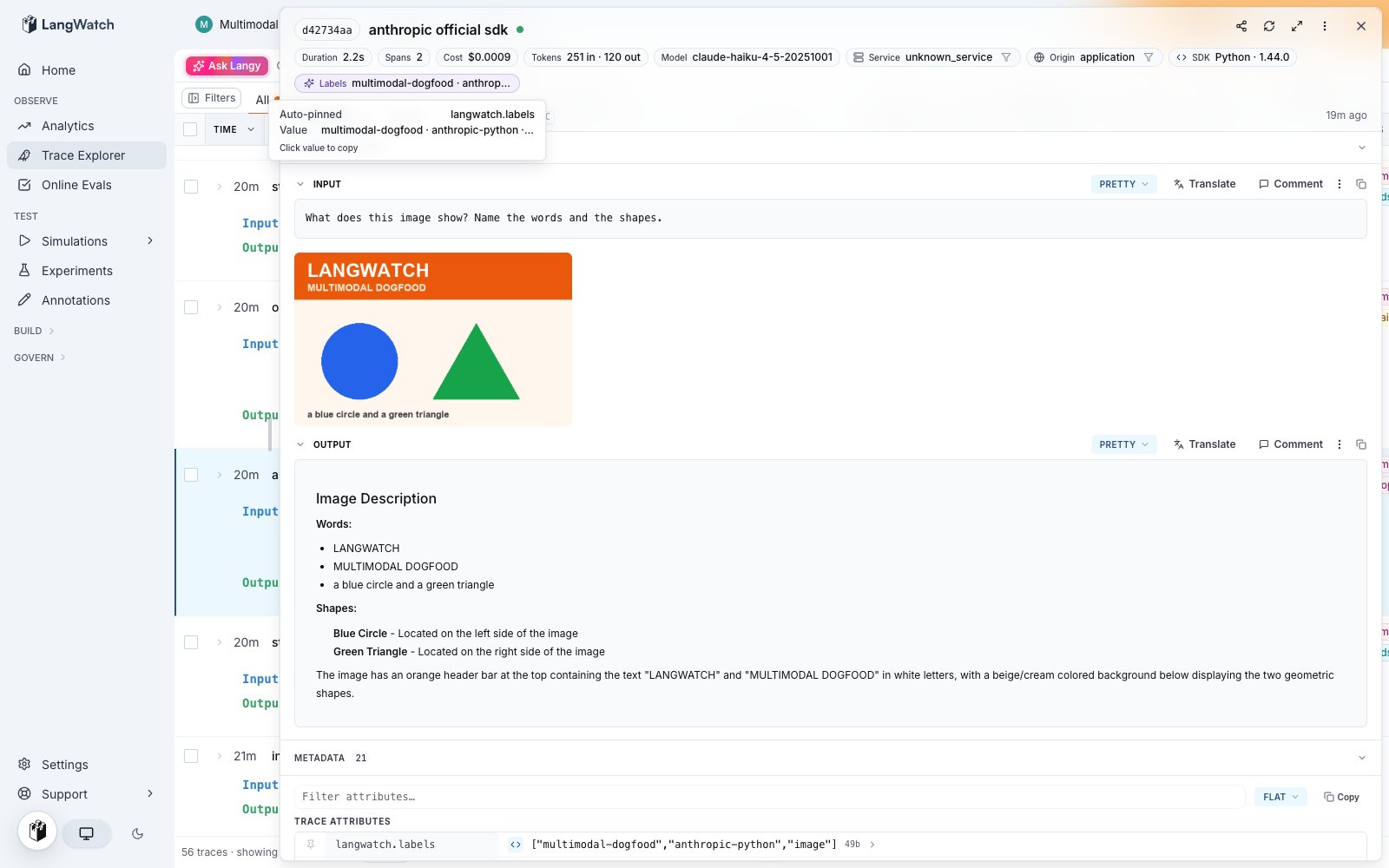
The trace drawer Summary tab, with the captured picture rendered inline below the input text and the model answer below it
Related
- Capturing Documents, for PDF files and other attachments
- Capturing Audio and Voice, for recordings and voice agents
- Multimodal Evaluation, to score image inputs and outputs with a vision model
- View images in datasets, to hold images in a dataset column