

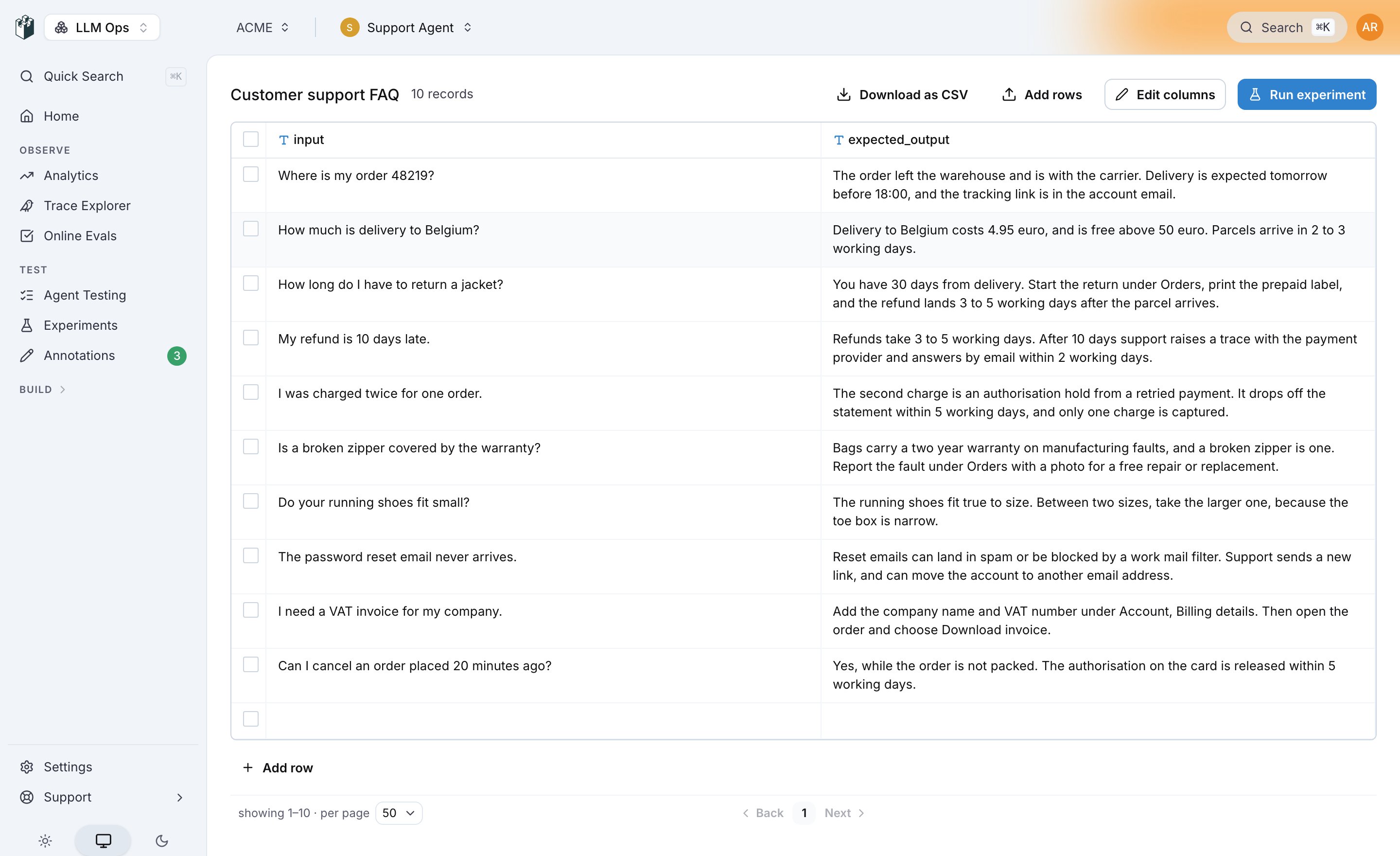
Create a dataset
Open Datasets and click Upload or create dataset.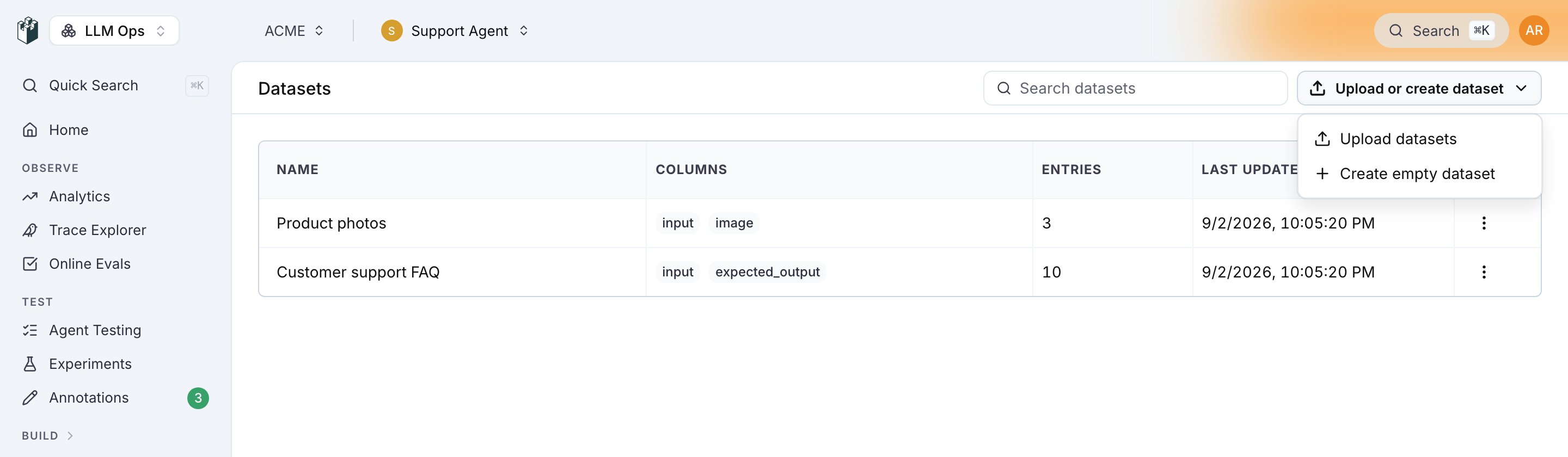
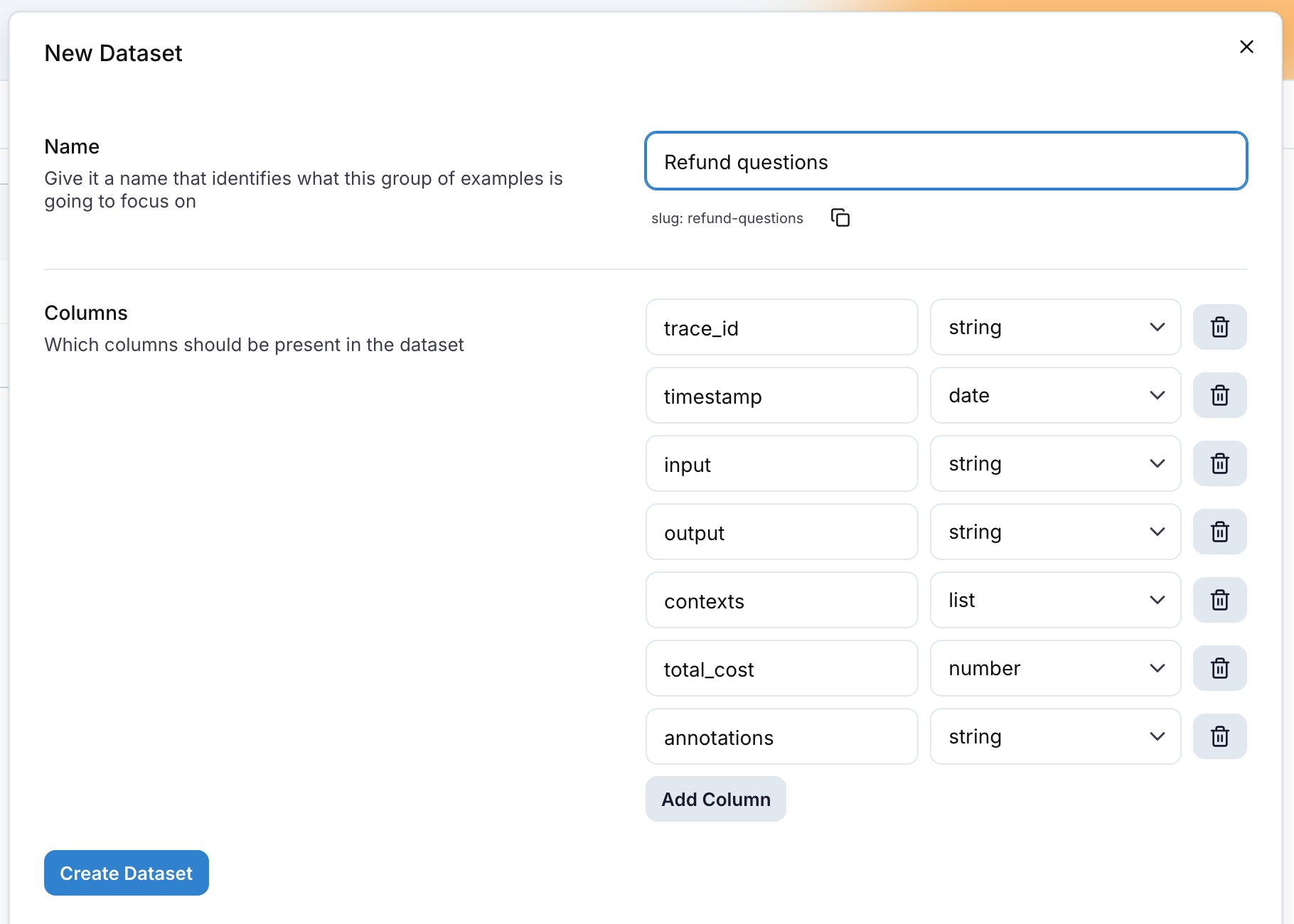
Create an empty dataset
In the New Dataset drawer, type a Name; the slug under it is what the SDKs and the CLI use. Then define the Columns. A new dataset starts withtrace_id, timestamp, input, output, contexts, total_cost and annotations. Remove the columns you do not need, click Add Column for the ones you do, and click Create Dataset. The type select on each column offers string, number, boolean, date, list, json, image (URL), json chat messages (OpenAI format) and json spans.
id or selected. Each column has one of these types:
Upload files
Upload datasets opens a drawer that accepts CSV, JSON and JSONL files, several at a time. Each file becomes one dataset. For each file, edit the dataset name, then check the columns read from the file. A CSV gives its columns from the header row, a JSON or JSONL file from the object keys. Rename a column, change its type, drag it to reorder, or exclude it. Click Upload all.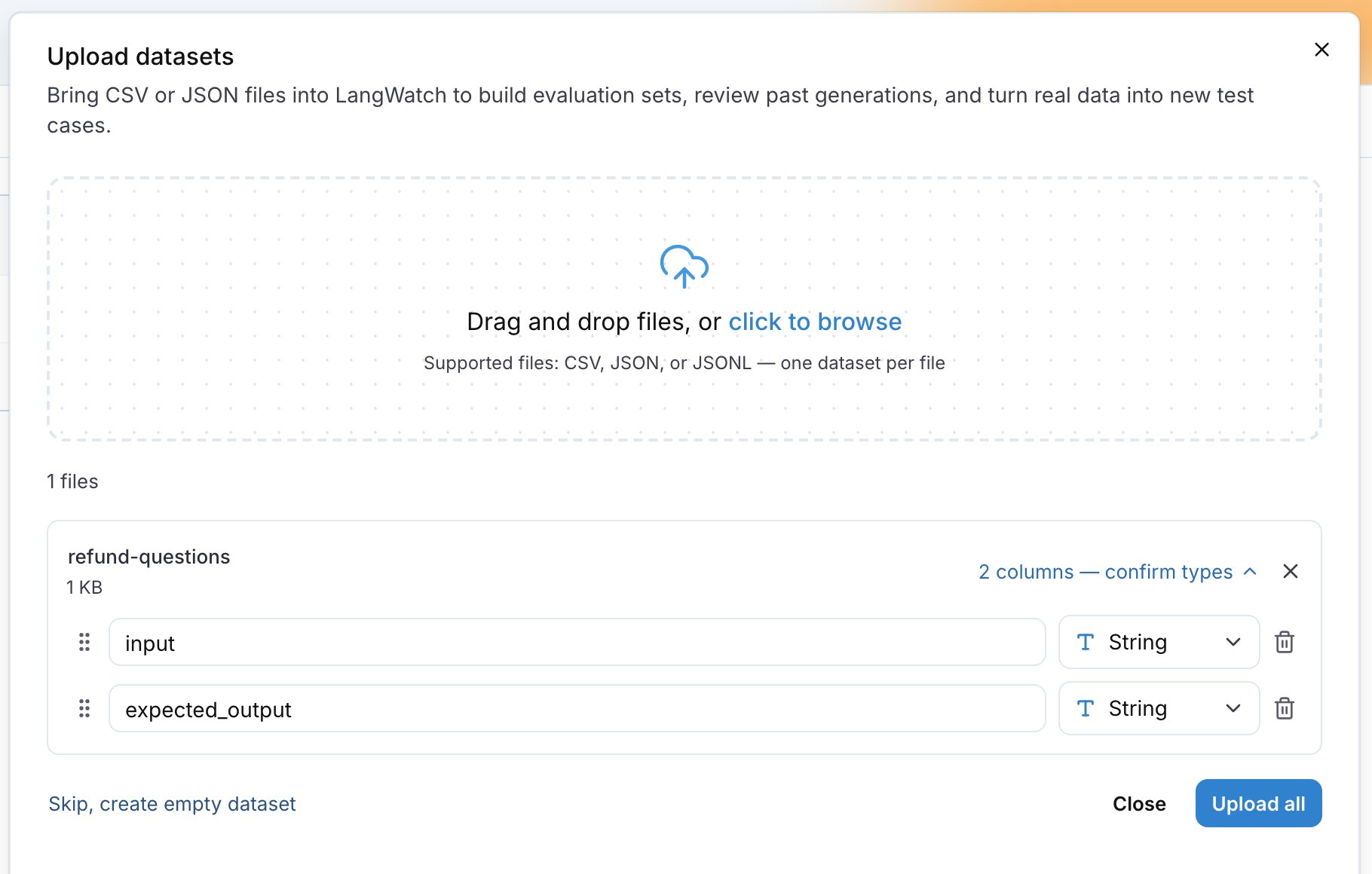
Edit a dataset
Click a dataset in the list to open its page. The header shows the record count and an autosave status.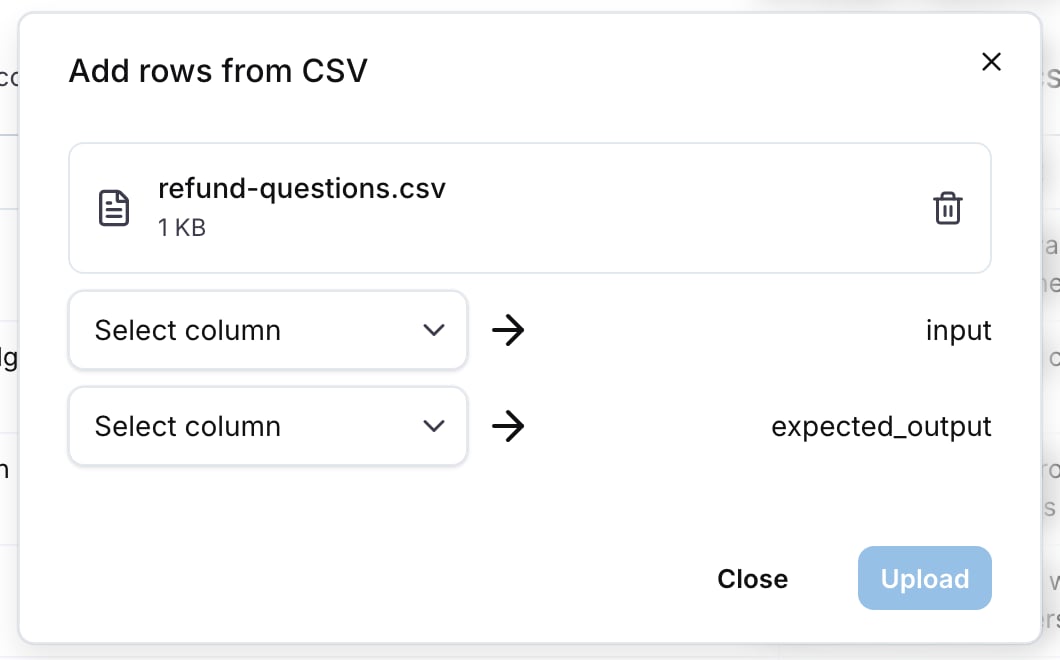
Add rows from traces
Open the Trace Explorer, select the traces with the checkboxes, and click Add to dataset in the action bar. From an open trace, the header menu has Add trace to dataset and, for a multi-turn conversation, Add conversation to dataset.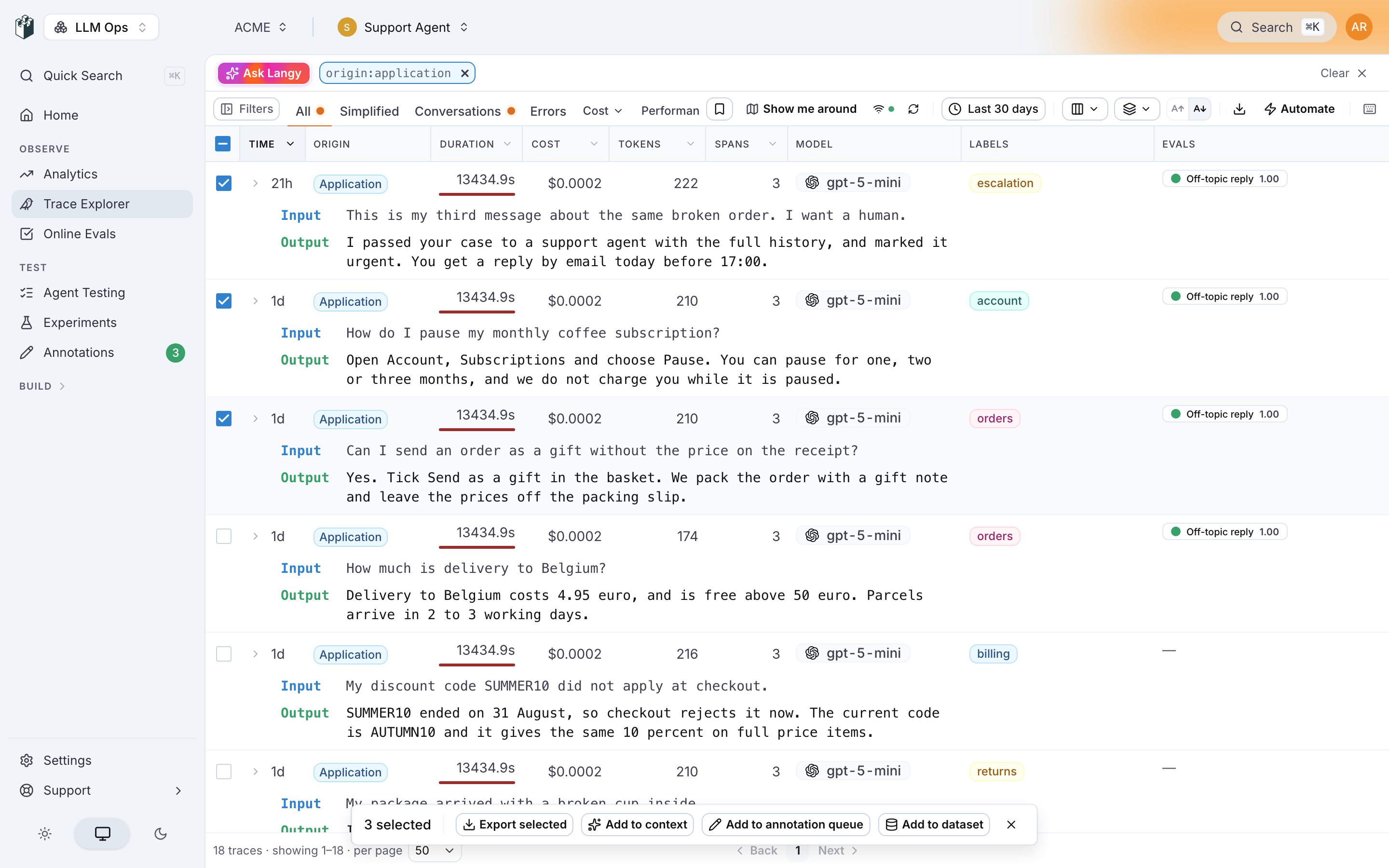
- Dataset: pick an existing dataset, or click + Create New.
- Mapping: one source per dataset column. Current Trace maps each trace to one row. Thread groups the selected traces by
thread_idand maps each conversation to one row. See Threads in datasets. - Preview: the rows that will be added. Double-click a cell to edit it, and untick a row to leave it out.
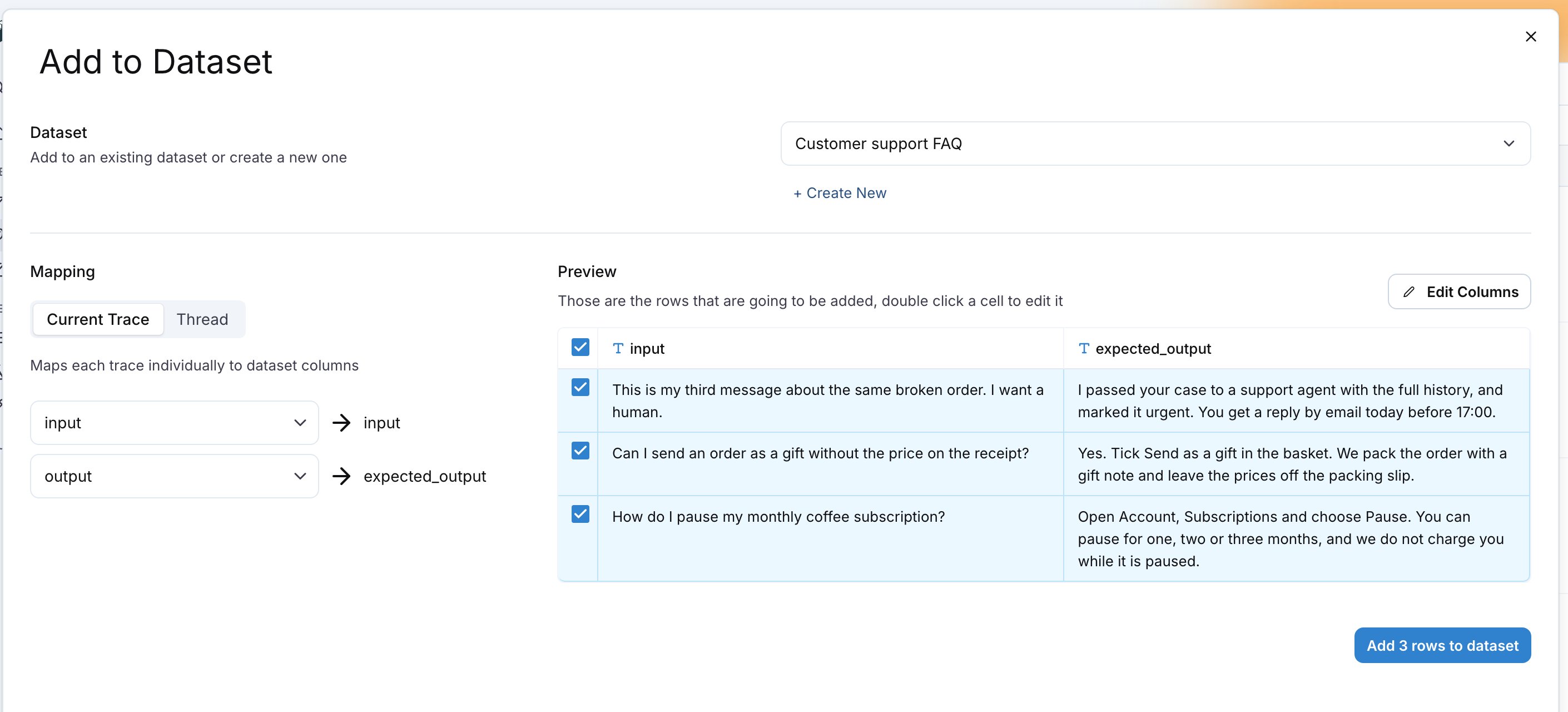
trace_id, thread_id, timestamp, input, output, contexts, the metrics (cost, tokens, timings), spans, metadata keys, evaluations per evaluator, annotations (comment, score, reason, expected output), events, and Full Trace (AI-Readable), a text rendering of the whole trace for an LLM to read. When a column name matches a source, for example input or output, the mapping is filled in for you.
To keep adding matching traces as they arrive, use an automation. See Build datasets from traces automatically.