

Where credentials live
A provider credential is a row under Settings > Model Providers. The row belongs to an organization, a team or a project, and every virtual key whose scope can see the row can dispatch through it. The same rows serve evaluators, the playground and the rest of LangWatch.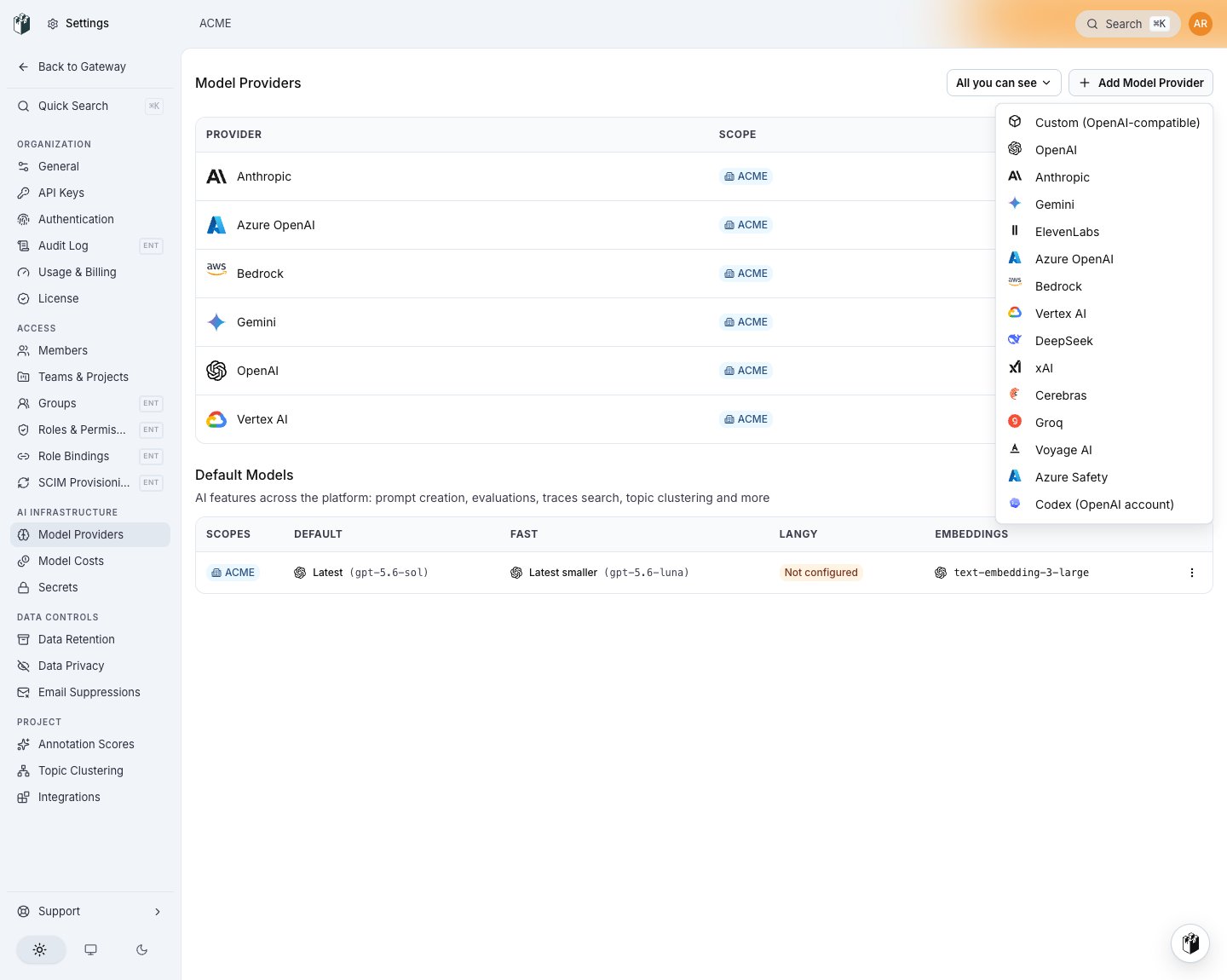
Settings > Model Providers, the Add Model Provider menu.
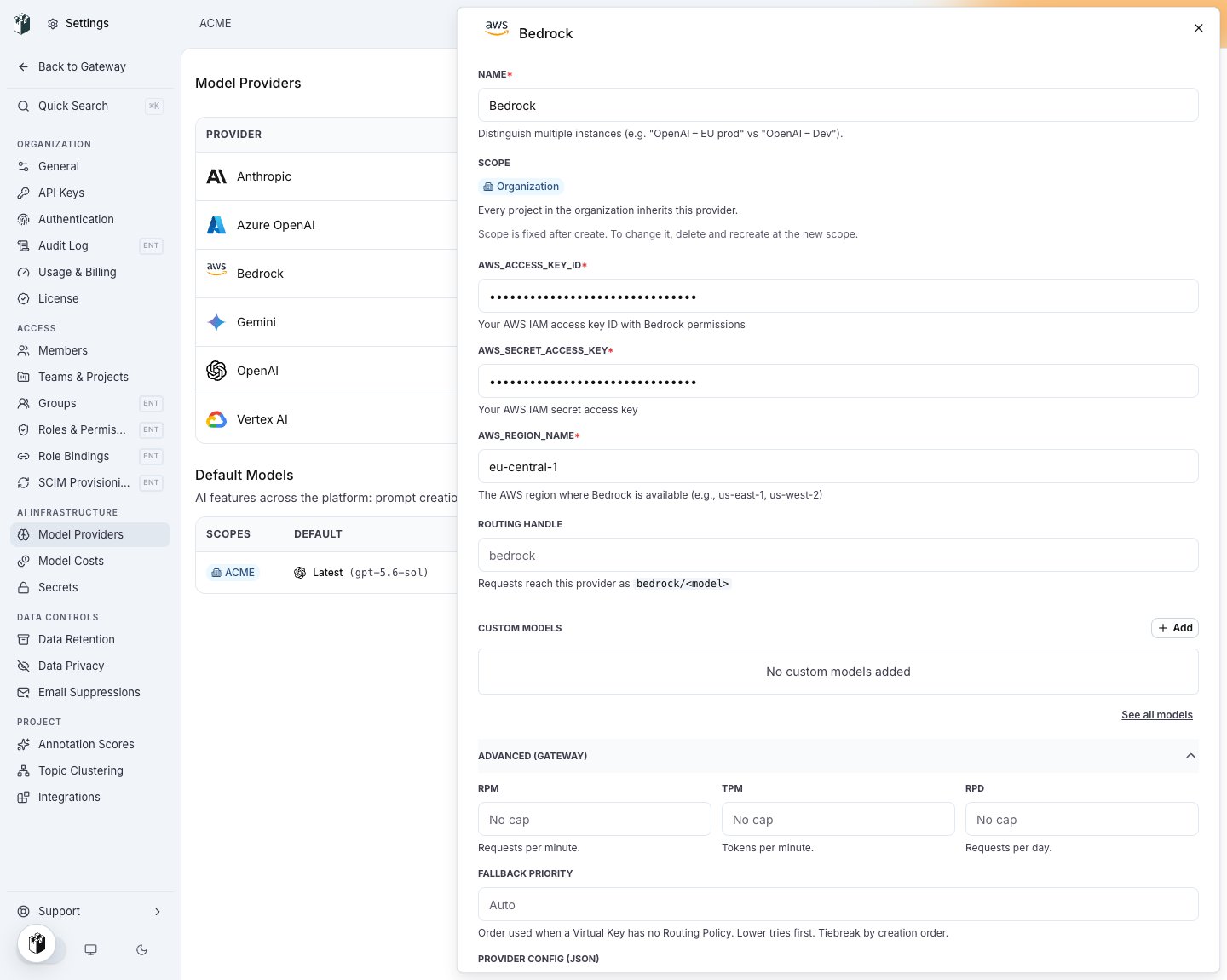
Advanced (Gateway) on a Bedrock row: fallback priority and provider config.
Supported providers
Model names areprovider/model. The provider segment is the id in the first column. See Model naming.
The provider ids
azure_openai, aws_bedrock, vertex_ai, google_vertex and google_gemini are accepted as aliases of azure, bedrock, vertex and gemini.
What each endpoint family means
A request to an endpoint the provider does not serve gets the provider’s own error back. For example,
POST /v1/embeddings with an Anthropic model returns Anthropic’s rejection.
More than one row of the same provider
Create one row per account, region or endpoint, for example an Azure OpenAI row per Azure resource. Give each row a Routing handle, for exampleeu, and pin a request to that row with eu/gpt-5-mini. A routing policy orders the rows a key tries. See Routing policies.
Also check: Model naming for how a model name selects a provider, and Fallback chains for what happens when a provider fails.